How to Choose the Right Locksmith for Apartments in Philadelphia
Living in an apartment comes with its own set of challenges, and security is near the top of the list. Whether you are renting in Center City, South Philadelphia, or University City, the front door is your first line of defense. But when that door locks you out at midnight, or the deadbolt starts sticking, you need someone who knows apartment hardware specifically. A general locksmith might get the job done, but a specialized locksmith for apartments brings a level of understanding that can save you time, money, and frustration.
Why Apartment Security Is Different
Apartments often have unique lock setups that you do not see in single-family homes. Many buildings use master key systems, where the landlord holds a key that opens every unit, while tenants have keys that only open their own door. That system requires careful key control and precise rekeying when a tenant moves out. A locksmith for apartments knows how to work within these systems without compromising security for the whole building.
Another difference is the door itself. Apartment doors are often metal or metal-clad, which means drilling or installing new hardware requires specific tools and techniques. A standard residential locksmith might not carry the bits or templates needed for commercial-grade doors. If you live in a high-rise in Center City, your door might use a Medeco or Mul-T-Lock cylinder, both of which are high-security brands that need authorized keys and specialized knowledge to service. Choosing a locksmith who is familiar with these brands means you get a repair that lasts, not a temporary fix that fails a week later.
What to Look for in a Locksmith for Apartments
When you search for a locksmith for apartments, start by checking their credentials. Membership in organizations like the Philadelphia Locksmiths Association or ALOA (Associated Locksmiths of America) is a good sign. These groups require members to follow a code of ethics and often provide ongoing training. A locksmith who belongs to these associations is less likely to cut corners or overcharge you.
Also ask about their experience with common apartment lock brands. Schlage, Kwikset, Baldwin, Yale, and Master Lock are all popular choices for apartment doors. Some are easier to rekey than others, and some have electronic options like keypads or SmartKey systems. If you are thinking about upgrading to an electronic keypad lock, a locksmith who has installed dozens of them can tell you which model works best with your door's thickness and alignment. They can also advise on whether a retrofit is possible or if you need a new door prep.
Common Apartment Lock Issues
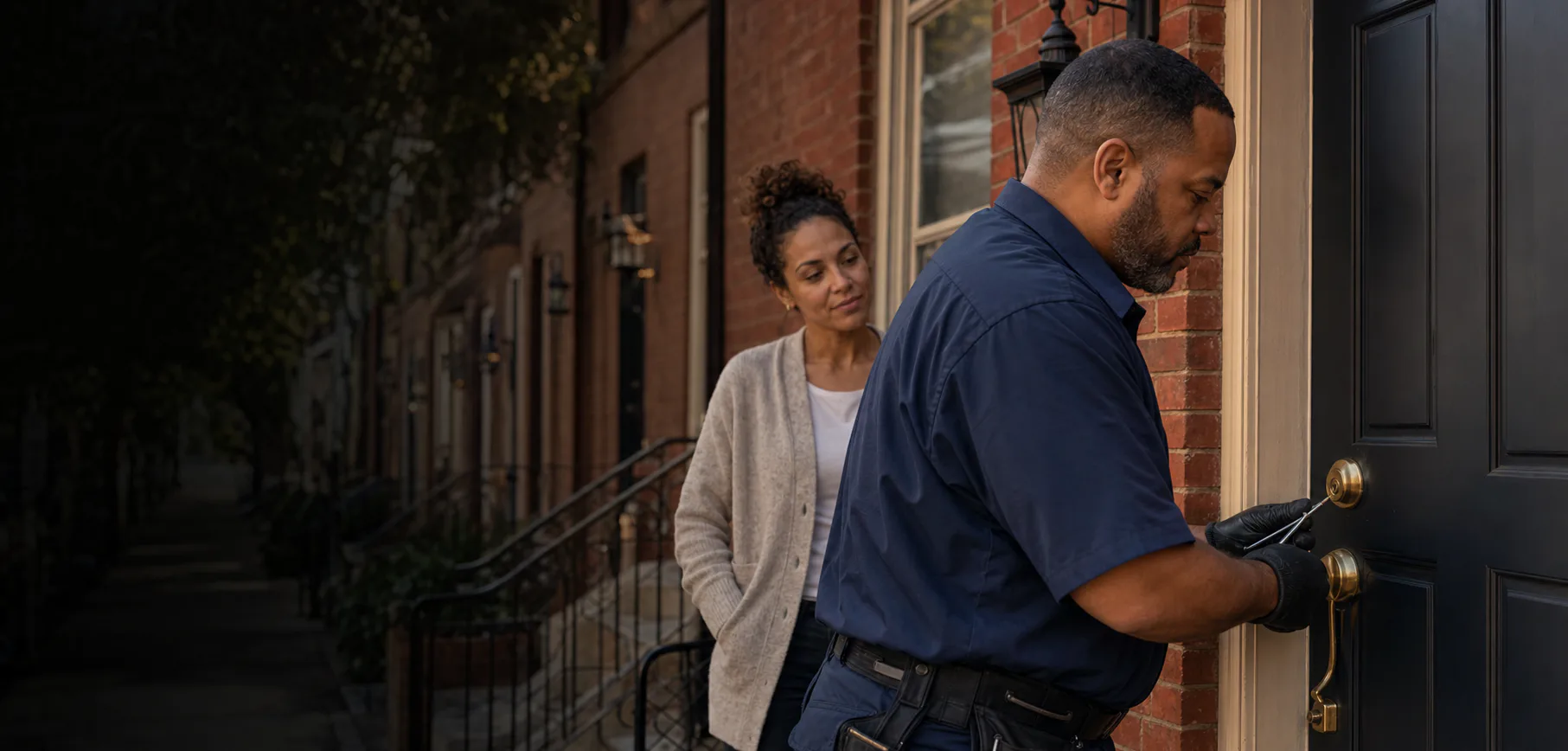
One of the most frequent calls I get is for an apartment lockout. You step into the hallway to grab your mail, the door swings shut behind you, and the deadbolt is engaged. You are locked out in your socks. A good locksmith can get you back inside without damaging the door or the frame. They will use tools like a tension wrench and pick, or if the lock is a simple spring latch, they might use a bypass tool. The key is that they do it fast and cleanly.
Another common issue is key duplication. Landlords often restrict key duplication for high-security cylinders like Medeco or Mul-T-Lock to prevent unauthorized copies. A locksmith who is an authorized dealer for those brands can make a duplicate that works, while a general hardware store might refuse or produce a copy that jams. If you lose your last key, a locksmith can also originate a new key from the lock cylinder itself, though this takes more time and skill.
Rekeying is another service that apartment dwellers need more often than homeowners. When you move into a new place, you never know how many copies of the old keys are floating around. Rekeying changes the pins inside the lock so the old keys no longer work. It is cheaper than replacing the entire lock, and it keeps the same hardware on the door. A locksmith for apartments can rekey a Schlage or Kwikset deadbolt in about 15 minutes, and they can also rekey a master key system so that the landlord's key still works but the old tenant keys do not.
Electronic Locks and Smart Systems
More apartment buildings are moving to electronic keypad locks or smart locks. These offer convenience, but they also introduce new failure points. Batteries die, keypads wear out, and the electronics can glitch. A locksmith who understands both mechanical and electronic locks is a better bet than one who only knows traditional pin tumblers. For example, a Yale electronic lock might have a mechanical override that uses a traditional key. If you lose that override key, you might need a locksmith to pick the lock or drill it out. A knowledgeable locksmith can also help you program a SmartKey system or reset a KeyMe kiosk code, though most key duplication kiosks are self-service.
One thing to keep in mind with smart locks: they often require a Wi-Fi connection and a smartphone app. If your building has thick concrete walls, the signal might not reach. A good locksmith will talk you through the pros and cons of different systems, not just push the most expensive option.
Emergency vs. Planned Service
Apartment lock emergencies happen at the worst times. A locksmith that offers 24/7 service is essential if you work late or live alone. But not all emergency calls are the same. An apartment lockout at 2 AM in South Philadelphia might require a different approach than one during business hours in University City. The best locksmiths have a mobile van stocked with common parts for brands like Schlage, Kwikset, Baldwin, and Master Lock. They also carry tools for drilling out a seized deadbolt or replacing a broken key in the lock.
For planned work, like rekeying after a move or installing a new deadbolt, you can schedule a visit during the day. This gives you time to compare prices and ask about specific hardware. Many locksmiths will give you a quote over the phone if you describe the lock and door type. Be wary of anyone who gives a flat rate without asking about the lock brand or the door material. A Medeco cylinder costs more to rekey than a basic Kwikset, and a metal door takes more time to drill than a wooden one.
Security Upgrades for Renters
If your landlord allows it, upgrading your lock can improve your peace of mind. A high-security deadbolt from Mul-T-Lock or Medeco is pick-resistant and drill-resistant. You can also add a secondary lock like a chain or a floor bolt, though these might violate your lease. Some renters install a smart lock that uses a keypad code, so they never need to carry a physical key. Just check your lease first, and get the landlord's approval in writing. A locksmith for apartments can recommend upgrades that are tenant-friendly and reversible.
Another option is a door reinforcement kit. These add a strike plate with longer screws that bite into the door frame, making it harder to kick the door in. A locksmith can install this in about 30 minutes, and it works with any lock brand. For under $100, it is one of the most effective security improvements you can make as a renter.
Final Thoughts
Finding the right locksmith for apartments in Philadelphia does not have to be a guessing game. Look for someone who knows the local buildings, carries parts for common brands like Schlage, Kwikset, Baldwin, Yale, and Master Lock, and can handle high-security cylinders from Medeco and Mul-T-Lock. Check their affiliation with the Philadelphia Locksmiths Association or ALOA. Ask about their experience with electronic locks and key duplication, including KeyMe and SmartKey systems. And always get a quote before they start work.
A good locksmith treats your apartment like their own home. They show up on time, explain what they are doing, and leave the door working better than they found it. That kind of service is worth paying for, and it is what separates a real professional from someone who just owns a set of picks.